Services / Cloud
Cloud Services
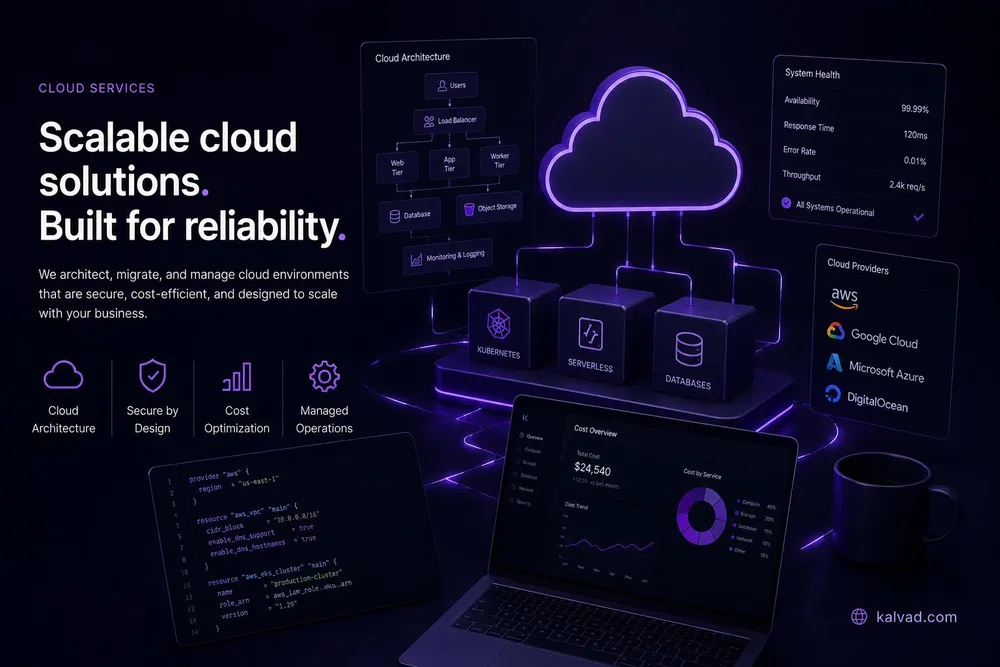
We architect, migrate, and optimize cloud infrastructure that works in production. AWS, Azure, GCP, or hybrid: we design for reliability, cost control, and long-term maintainability. No vendor lock-in, no unnecessary complexity: just cloud infrastructure engineered to run your systems efficiently.

Problems We Solve
Cloud projects rarely fail from lack of tools. They fail from lack of planning. Below are the situations we encounter most often.
Cloud bills that grow without explanation
The first month is affordable. Six months later, the bill has tripled and nobody knows why. Unused instances, orphaned storage, data transfer charges, and over-provisioned resources add up silently. We implement cost visibility from day one: tagging, budgeting, alerts, and regular audits so you know exactly what you are paying for.
Migration projects that stall halfway
Lift-and-shift moves the problem to the cloud without solving it. Applications run slower, costs spike, and the team is stuck managing two environments. We plan migrations workload by workload: assess dependencies, design cloud-native architectures where it makes sense, migrate in phases, and validate at each step before moving on.
Vendor lock-in with no exit strategy
Proprietary services are convenient until you need to migrate, negotiate pricing, or handle an outage in a specific region. We design for portability: containerized workloads, infrastructure as code, and abstraction layers around vendor-specific APIs. You should own your architecture, not rent it from a single provider.
Performance that degrades at cloud scale
What worked with three services becomes a bottleneck at thirty. Latency between availability zones, database connection limits, and network throughput caps appear without warning. We design for scale from the start: proper service boundaries, caching strategies, connection pooling, and load testing before production traffic arrives.
What We Deliver
Concrete cloud services, not vague promises.
Cloud architecture & design
VPCs, subnets, security groups, and service mesh. Cloud infrastructure designed for security, performance, and cost efficiency.
Migration & modernization
Lift-and-shift when appropriate, refactor when it matters. Phased migrations with rollback plans at every stage.
Cost optimization & FinOps
Right-sizing, reserved capacity, spot instances, and continuous monitoring. Cloud spend that makes financial sense.
Managed cloud operations
Ongoing management, patching, scaling, and incident response. Your cloud running smoothly without a dedicated ops team.
Our Approach
Cloud migration is not a destination, it is a transition. We start by understanding your current systems, workload characteristics, and business constraints. Every migration is phased, every architecture is version-controlled, and every decision is documented so your team understands not just what was built, but why.
Workload assessment
Phased migration
Infrastructure as code
FinOps practices
Cloud-native patterns
Documentation & runbooks
Why Work With Kalvad?

Engineering-first, not sales-first
Platform-agnostic: AWS, Azure, GCP, or hybrid
Honest about cloud trade-offs, not a cloud evangelist
Infrastructure as code and open standards
Cost optimization built into every architecture
Long-term maintainability over quick migrations
Want to understand our engineering philosophy? Learn more about why we do things differently.
Related Blog Posts

Security is a never-ending process, not a validation step! (2026 edition)
Four years later, half of what I wrote is embarrassing. The other half is still true. Your WAF is still useless, your SIEM still spams your on-call, and your security team still cannot code. Let's fix all of that.

DevOps in 2025: The Pauperization Machine (Now With More AI and Less Brain Cells!)
In 2021, concerns were about Kubernetes and sysadmin basics. By 2025, DevOps is characterized by AI over-reliance and waning technical depth. Kalvad prioritizes foundational knowledge over button-pushing and AI-generated solutions, critiquing current trends humorously.

Live Free or RAM Hard: Declarative Linux Style
Tired of bricking Linux servers? Try Alpine Linux: a lightweight, secure NixOS alternative. Explore diskless and data modes for better security and efficiency. Run Docker on 352MB RAM with our QEMU guide. Ideal for efficiency.

DNS Load Balancing: The Illusion of Simplicity
Explore when to use DNS load balancing and the key conditions for its effectiveness in managing network traffic.
Related Product
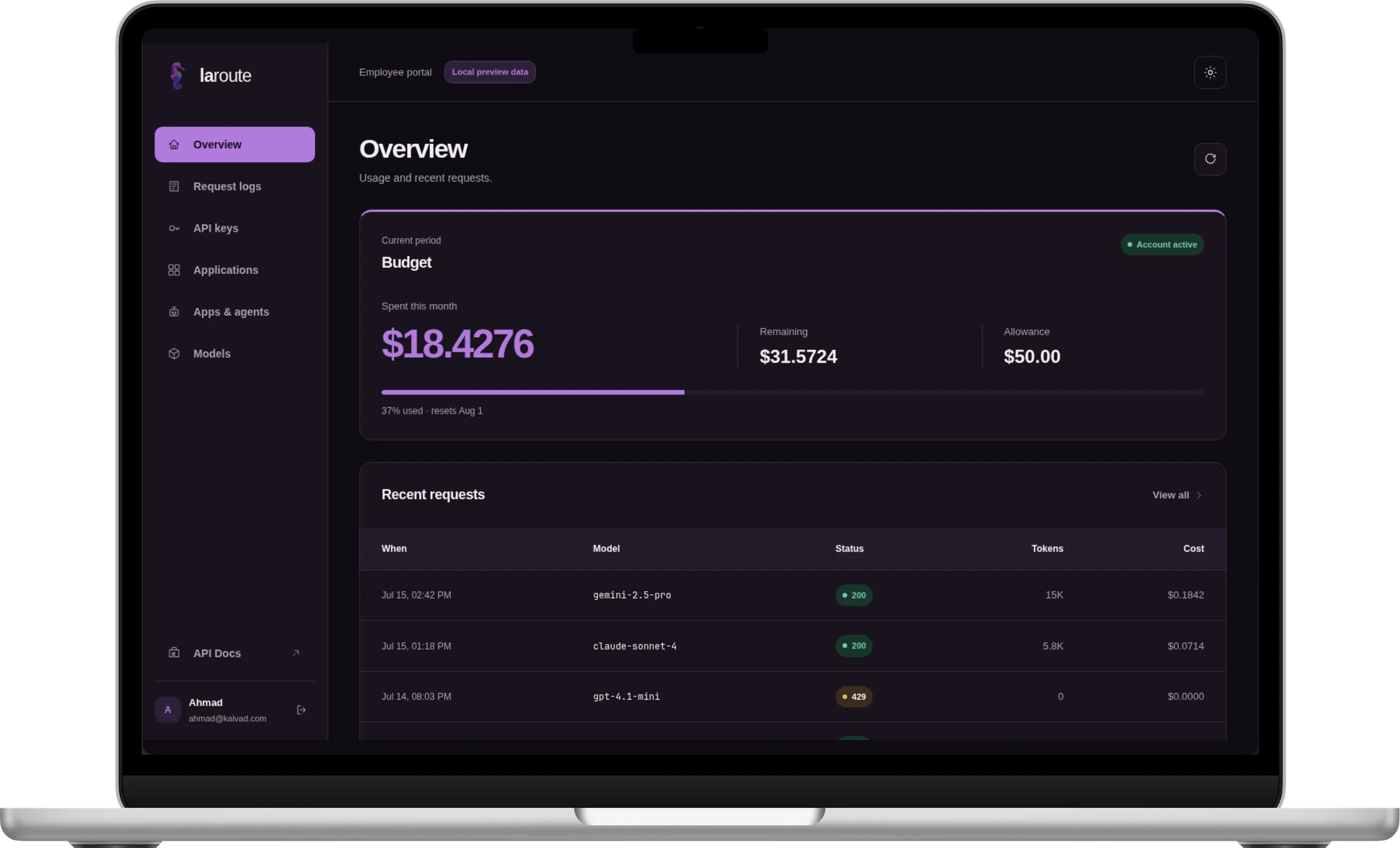
Laroute
Self-Hosted AI Gateway
One OpenAI-compatible API for cloud and private models, with a built-in AI workspace
Frequently Asked Questions
Should we migrate to the cloud or stay on-premise?
It depends on your workload characteristics, compliance requirements, and cost structure. Cloud is excellent for variable workloads, rapid scaling, and reducing capital expenditure. On-premise makes sense for predictable high-volume workloads, strict data residency requirements, or when cloud egress costs outweigh the benefits. We help you evaluate the trade-offs honestly. Some workloads belong in the cloud, some on-premise, and many work best in a hybrid setup.
How long does a cloud migration take?
A focused migration of a single application can take 4 to 8 weeks. A full organizational migration with dozens of services typically spans 6 to 18 months. We prioritize workloads by business impact and technical complexity, migrating in phases so you see progress early. Each phase includes testing, validation, and rollback procedures so nothing is left to chance.
How do you control cloud costs?
Cost optimization starts with architecture: right-sizing instances, using reserved or spot capacity where appropriate, and designing for efficient resource usage. We implement tagging, budgeting, and alerting so you always know what is being spent and why. We also review architectures quarterly to catch cost drift before it becomes a problem. The goal is not to minimize cost at the expense of reliability, but to eliminate waste while maintaining performance.
Do you recommend multi-cloud or single-cloud?
Multi-cloud adds significant complexity: different APIs, different tooling, different operational models. We only recommend it when there is a clear business case: regulatory requirements, geographic coverage, or avoiding single-vendor dependency for critical workloads. For most organizations, a well-architected single-cloud setup with portable infrastructure as code provides the best balance of capability and operational simplicity.
What happens after migration is complete?
We offer ongoing cloud management and optimization, but we also design systems to be operable by your team. Every migration includes documentation, runbooks, monitoring dashboards, and knowledge transfer sessions. We can stay on for continuous optimization, hand over operations gradually, or provide periodic reviews depending on your needs.
Let's talk about your cloud architecture
Whether you are planning a migration, trying to control cloud costs, or dealing with performance issues in an existing cloud setup, we can help. No sales pitch: just an engineering conversation about your workloads, your constraints, and what comes next.
Talk with our engineers