Services / Data & AI
Data Analytics & AI
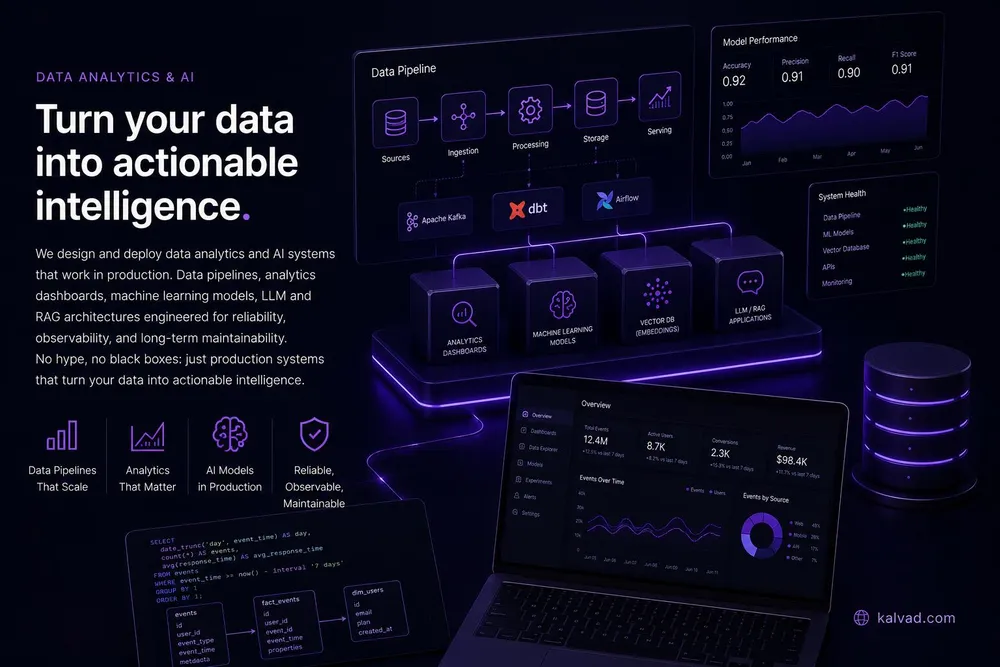
We design and deploy data analytics and AI systems that work in production. Data pipelines, analytics dashboards, machine learning models, LLM and RAG architectures engineered for reliability, observability, and long-term maintainability. No hype, no black boxes: just production systems that turn your data into actionable intelligence.

Problems We Solve
Data and AI projects fail from unrealistic expectations and poor engineering, not from lack of tools. Below are the situations we encounter most often.
Data silos with no single source of truth
CRM, ERP, spreadsheets, and SaaS tools each hold a piece of the picture. Nobody knows which numbers are correct. We design data pipelines that consolidate and transform data so your team works from a single, reliable source.
AI demos that never reach production
The prototype works great with a curated dataset. Production traffic reveals LLM latency issues, hallucination problems, and cost overruns. We engineer AI systems for production from day one: evaluation pipelines, caching, fallback strategies, and monitoring so the system works when real users depend on it.
Analytics dashboards nobody trusts
Reports that show different numbers depending on who runs them. Metrics defined differently across teams. Data that is hours or days old by the time it appears. We build analytics systems with clear data lineage, consistent metric definitions, and automated refresh cycles so people actually use the dashboards.
Data pipelines that break silently
A schema changes upstream, a connector fails, and nobody notices until a report is wrong or a model produces garbage output. We implement data quality checks, alerting, and observability so pipeline failures are caught and resolved before they impact decisions.
What We Deliver
Concrete data and AI services, not vague promises.
Data pipeline engineering
Ingestion, transformation, and storage pipelines. Batch and streaming. Data that flows reliably from source to insight.
Analytics & BI systems
Dashboards, reports, and self-service analytics. Metrics that are consistent, current, and actually used by decision-makers.
AI/ML production systems
Machine learning and LLM systems deployed with evaluation, monitoring, and fallback strategies. Systems that work beyond the demo.
RAG architecture & deployment
RAG systems that connect your data to LLMs with proper chunking, embedding, evaluation, and latency optimization. Production RAG, not prototypes.
Our Approach
Every data and AI project starts with understanding what data exists, what decisions need to be made, and what constraints shape the architecture. We favour iterative delivery with working systems at each stage, production-grade engineering from day one, and transparent decisions about trade-offs between accuracy, latency, and cost.
Data audit & assessment
Architecture design
Iterative delivery
Production deployment
Monitoring & evaluation
Documentation & knowledge transfer
Why Work With Kalvad?

Engineering-first, not hype-first
Production experience with RAG, LLM, ML, and analytics at scale
Honest about what AI can and cannot do today
Data quality and observability built into every pipeline
Long-term maintainability over quick demos
Open-source first: we build on and contribute to open-source tools
Want to understand our engineering philosophy? Learn more about why we do things differently.
Related Blog Posts

Three Engineering Managers Walk Into a Shisha Bar
One claims building your own AI agent is worth it. Another calls it intellectual self-indulgence. Five agent runs and twelve cents settle the argument.

The AI War Has Begun. And You're Already Conscripted.
On June 13, 2026, the US government blocked Fable 5, firing the first shot in the AI War. At Tech Fest Nancy the day before, François Zaninotto's talk on AI-assisted development sparked the sovereignty debate. If you're still using cloud LLMs without self-hosting, you're already on the losing side.

From Mic Blip to Wiki Page: Meet Hubert, Our Self-Writing Meeting Machine
Meet Hubert, our self-writing meeting machine, inspired by the legendary OSS 117. Like Hubert Bonisseur de la Bath, it navigates chaos with effortless charm, turning audio into structured notes. No buttons, no fuss. Just results, delivered with the panache of Jean Dujardin’s iconic wink.
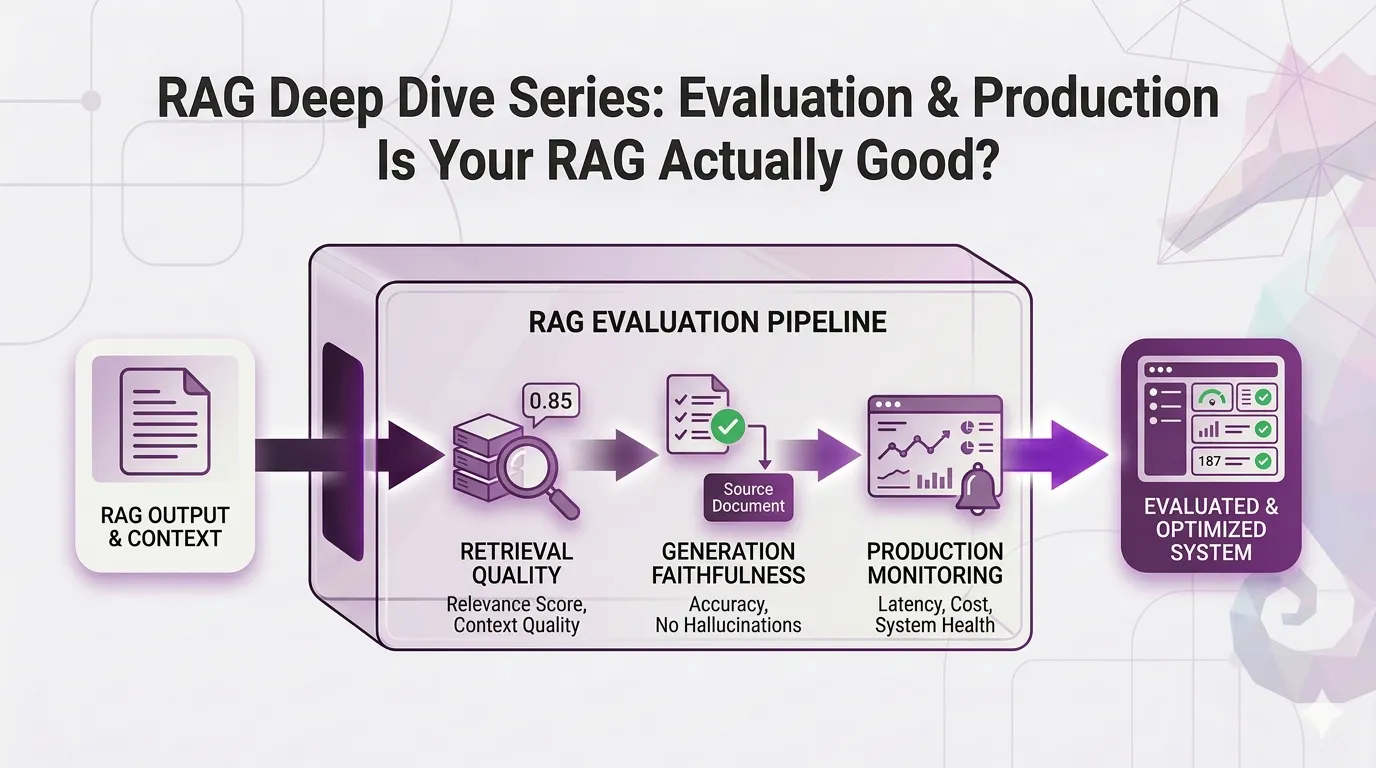
RAG Deep Dive Series: Evaluation & Production
Part 8: How to Know If Your RAG System Is Actually Good (And Keep It That Way)
Related Product
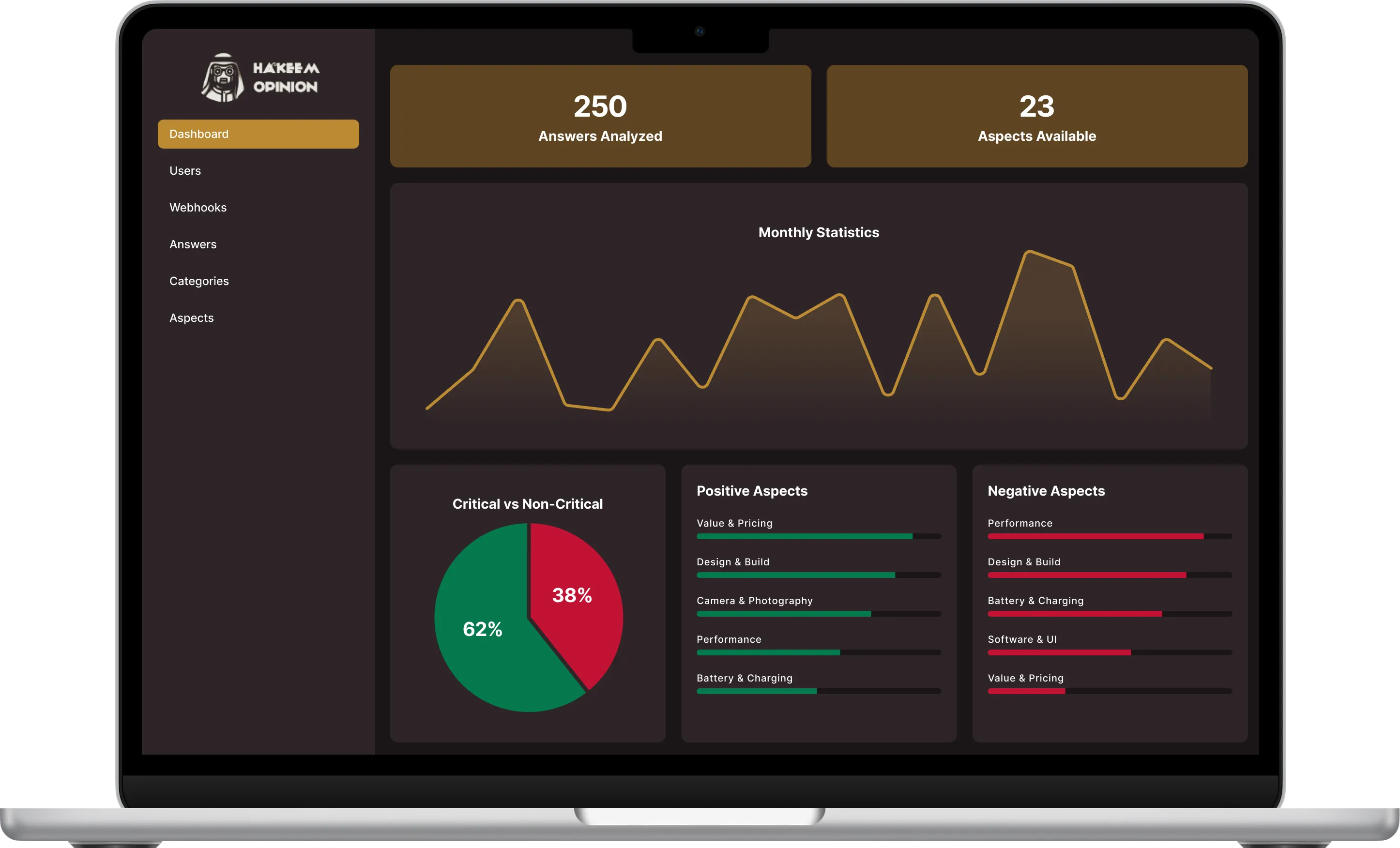
Hakeem
AI-Powered Feedback Analysis
Gain instant, detailed insights from your feedback data.
Related Guide
RAG Architecture in Production
A practical guide to building production-grade RAG systems. Covers architecture, components, evaluation, latency optimization, and real-world trade-offs.
Frequently Asked Questions
Can we put AI into production, or is it still experimental?
AI systems are in production today, but they require different engineering practices than traditional software. LLMs are non-deterministic, latency-sensitive, and expensive to run at scale. We design AI systems with proper evaluation pipelines, fallback strategies, caching layers, and monitoring so they behave predictably in production. The technology is mature enough for production use, but it needs to be engineered correctly.
Is our data ready for analytics and AI?
Most organizations have more data than they realize, but it is scattered across databases, spreadsheets, and SaaS tools. We start with a data audit: what exists, where it lives, what shape it is in, and what gaps matter for your use case. We then design ingestion pipelines, transformation layers, and storage strategies that make the data accessible and reliable. You do not need perfect data to start, you need a plan to make it usable.
Should we use RAG, fine-tuning, or both?
It depends on your use case. RAG is ideal when you need the system to reference current, specific, or proprietary information that the base model was not trained on. Fine-tuning works better when you need the model to adopt a specific style, format, or domain expertise. In practice, we often combine both: a fine-tuned model for behavior and a RAG layer for knowledge retrieval. We evaluate your requirements and recommend the approach that balances accuracy, cost, and maintainability.
How long does it take to build a production AI system?
A focused RAG prototype with a defined knowledge base can be built in 4 to 6 weeks. A full production system with evaluation pipelines, monitoring, fallback strategies, and integration into existing workflows typically takes 3 to 6 months. We deliver working increments early so you can validate the approach before committing to a full build. The timeline depends on data availability, integration complexity, and the level of accuracy required.
What happens after the system is deployed?
AI systems require ongoing monitoring and tuning. Model performance drifts, data sources change, and user expectations evolve. We set up evaluation pipelines, usage dashboards, and alerting so you know when the system is underperforming. We can provide ongoing optimization, retraining, and architecture reviews, or train your team to manage the system independently. Documentation and knowledge transfer are included in every engagement.
Let's talk about your data architecture
Whether you are building data pipelines, deploying LLM systems, or trying to make sense of existing data, we can help. No sales pitch: just an engineering conversation about your data, your goals, and what comes next.
Talk with our engineers